

What Should Be Included in a Component Kit for PCB Assembly?
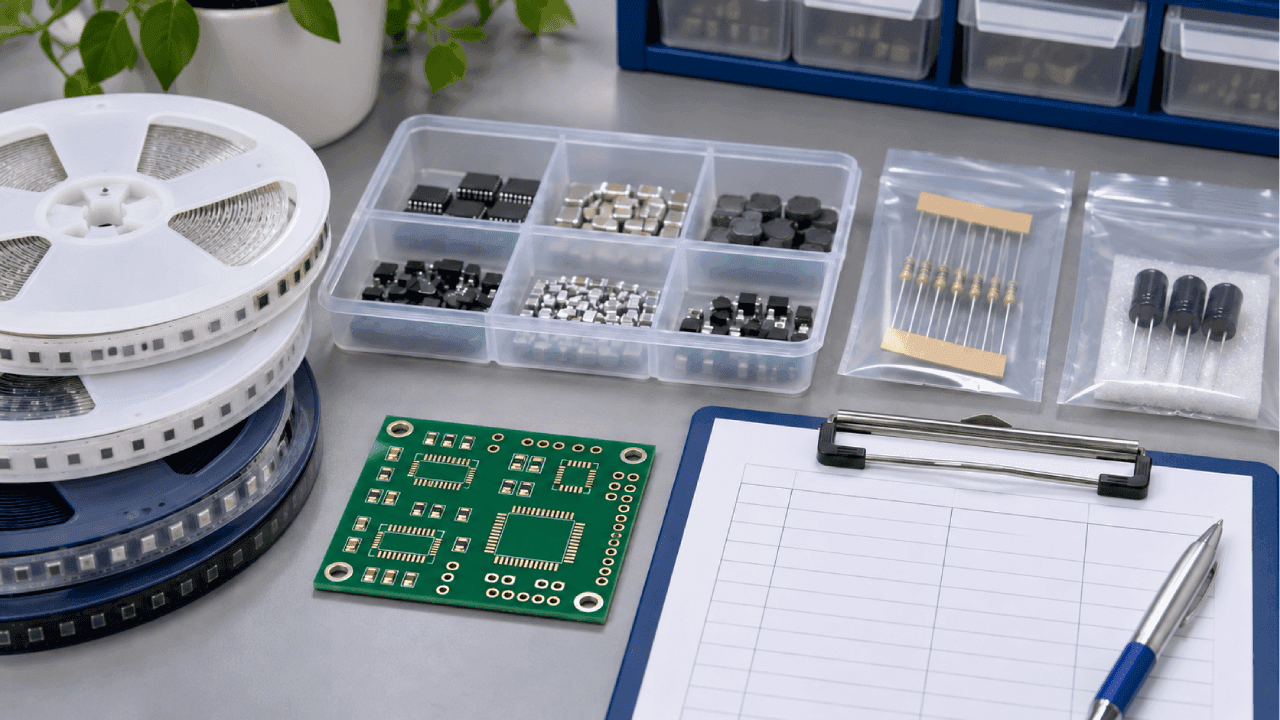
Learn how to prepare a component kit for PCB assembly, including the BOM revision, quantities, part identification, variants, shortages and handling requirements.
A component kit for PCB assembly should contain the parts needed for an agreed production build, identified and organised so the assembly team can check them against the correct bill of materials (BOM). Before sending or arranging a kit, agree the BOM revision, build quantity, quantities supplied and how any shortages or substitutions will be handled.
The exact handover format varies between manufacturers, so confirm their requirements before dispatch. This checklist can help you prepare for that conversation.
Start with the correct BOM and build revision
Identify the product or PCB assembly, its part number and the BOM revision. Make sure the revision matches the design and assembly information being used for the build.
A kit prepared against an old BOM may contain parts that no longer match the current design. If the BOM or assembly files change after the kit is prepared, tell the manufacturer and agree how the change will be controlled.
Make each component identifiable
The BOM should identify each component clearly. Useful information commonly includes:
- Manufacturer and full manufacturer part number
- Component description or value
- Quantity per board
- Reference designators, where applicable
- Approved alternatives, if any
Reference designators connect a BOM line to component locations on the PCB. They can help resolve questions, especially when several parts have similar descriptions. Electronics assembly guidance commonly uses BOMs and reference designators to identify parts for production.
Don’t rely on a brief description such as “10 kΩ resistor” if the design requires a particular package, tolerance, power rating or manufacturer part number.
Agree quantities for the build
State the number of assemblies to be built and the quantity of each component supplied. If you are providing the parts, check the quantities against the BOM before sending them.
Some builds may need extra components to cover process losses or purchasing constraints. The amount depends on the component and assembly process, so agree any additional quantity with the manufacturer rather than assuming a fixed allowance.
If a component is short, identify the exact line and shortfall. This allows the manufacturer to explain whether the build can proceed, needs to be split, or must wait for the remaining parts.
Keep different parts and variants distinct
Parts with similar values or appearances can be easy to mix up. Keep different part numbers identifiable, and label packaging so it can be matched to the BOM or the manufacturer’s agreed kitting method.
If the product has several versions, keep each variant’s materials clearly separated and identify which build each set is for. Agree in advance whether the manufacturer wants components grouped by part number, reference designator, assembly or another method.
Preserve packaging and handling information
Keep components in suitable packaging, especially where the packaging carries identification or handling information. Electrostatic discharge sensitive devices need appropriate protective handling and packaging; moisture-sensitive components may also have specific storage and exposure requirements. Check the component manufacturer’s instructions and agree any special requirements with the assembly provider.
Avoid combining parts from different packages or lots in a way that loses their identity. If lot or date-code traceability is required, state that before the kit is prepared and confirm what records should accompany it.
Make substitutions and restrictions explicit
If the design allows alternatives, list which parts are approved and how approval is recorded. If substitutions are not permitted, say so clearly.
A part that appears similar is not automatically an acceptable replacement. Any proposed alternative may need engineering assessment against the design requirements. Do not treat a shortage as permission to substitute a component.
Confirm what the kit includes
Before dispatch, agree whether the kit contains components only or also includes other build materials or documents. The assembly provider may have separate requirements for items such as PCBs, assembly drawings or placement data.
A final handover check can include:
- Correct product, assembly and BOM revision
- Build quantity and component quantities
- Clear identification for each part
- Variants separated and labelled
- Shortages and approved alternatives recorded
- Required handling and traceability information retained
- Delivery timing agreed with the assembly provider
A well-organised component kit makes it easier to check that the right materials are available for the intended build. If you’re planning a PCB assembly project, contact Synatel to discuss component kitting and the information needed for your requirements.
Need help with your next project?
Talk to a Synatel engineer
Whether you need a PCB quote, a full BOM sourcing review or an assembly enquiry, our engineering team is ready to help.