

What Information Should You Provide for an Electronic Component Sourcing Quote?
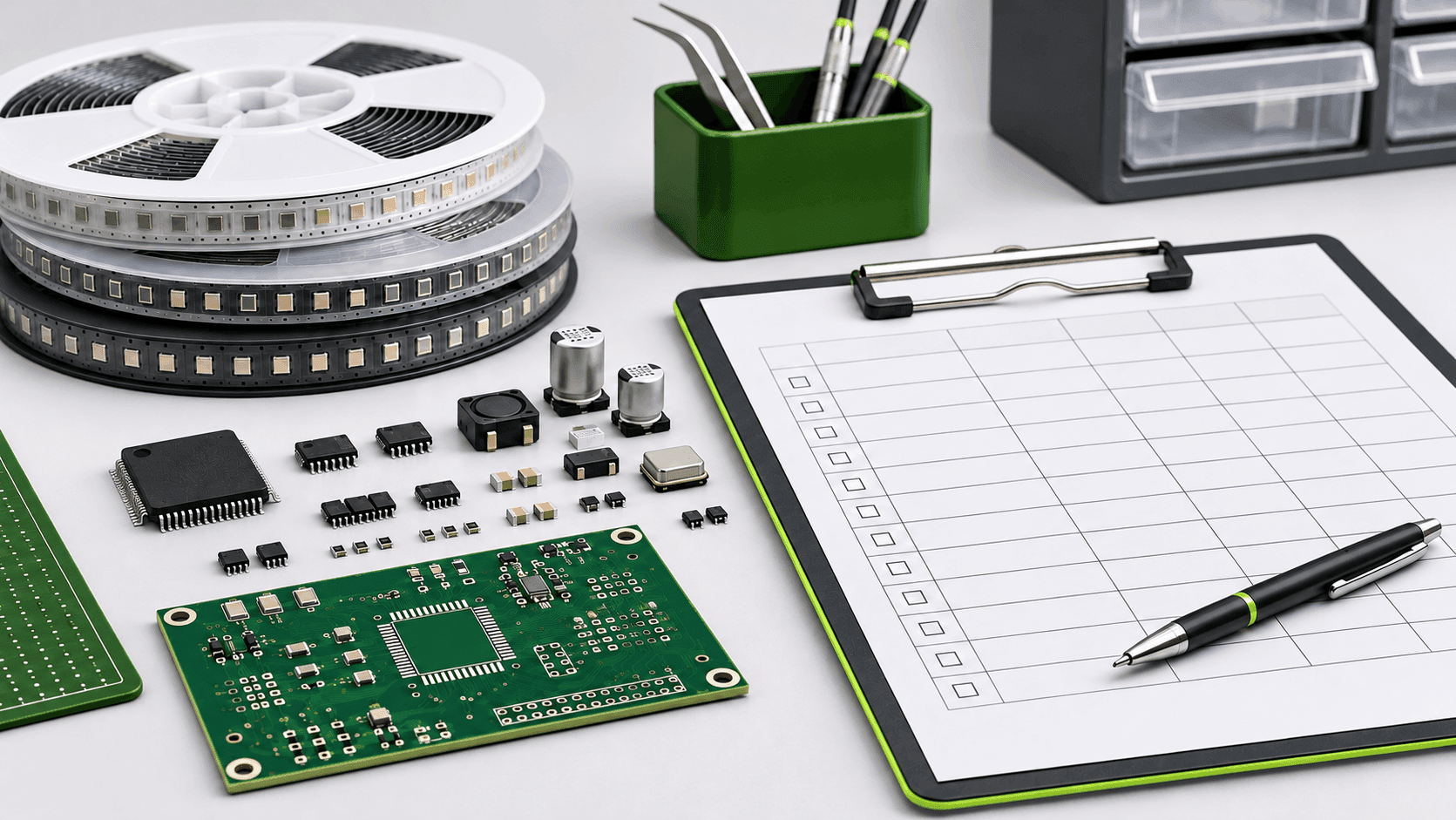
Preparing a component sourcing request? Learn what to include in your BOM—from full manufacturer part numbers and quantities to approved alternatives and sourcing requirements.
A clear bill of materials (BOM) helps a manufacturer or component sourcing team identify the parts you need and check availability. For a useful quote, provide the exact part numbers, quantities and any restrictions on alternatives. If some details are uncertain, mark them clearly rather than leaving the supplier to guess.
The information needed can vary depending on whether you’re asking for components only or for a wider manufacturing quote. The checklist below is a practical starting point.
1. Send the latest BOM revision
Include the product or assembly name, part number and BOM revision. Add the date of the revision if you use one. This helps both parties identify which list the quote is based on, particularly if the BOM is updated during the quotation process.
Send the BOM in an editable spreadsheet where possible. A PDF can be useful as a reference, but it’s harder to use for checking quantities and part numbers.
2. Include the full manufacturer part number
For each component, give the manufacturer’s name and the complete manufacturer part number (MPN), including its suffix. Suffixes can identify differences such as package, tolerance or temperature range, so a shortened number may not identify the exact part required.
A description such as “1 kΩ resistor” is useful as a cross-check but generally isn’t enough on its own to identify the intended component. Distributor part numbers can also help but label them separately from the manufacturer’s part number.
3. State the quantities clearly
Include the quantity of each component per finished assembly and how many assemblies you expect to make. If you need a separate quote for a particular production quantity, state that too.
For example, a BOM might show 12 components per assembly, while the quotation request is for 100 assemblies. That represents 1,200 components before any allowances for production or purchasing requirements are considered. Ask the supplier how it handles those allowances rather than assuming the final order quantity will match the BOM total exactly.
4. Add reference designators and useful descriptions
Reference designators—such as R1 or C4—show where a component appears in the circuit or assembly. They help identify parts and resolve questions when multiple components have similar descriptions. BOM guidance from electronics suppliers commonly includes reference designators along with part numbers and quantities.
A brief description, package or footprint can also help flag a possible mismatch. Treat these as supporting information: if the description and MPN appear to conflict, ask for clarification rather than choosing one silently.
5. Explain what alternatives are acceptable
State whether the specified manufacturer and part number must be used exactly, or whether alternatives may be proposed for your approval.
If alternatives are allowed, provide any constraints the design must meet, such as package, electrical ratings or operating temperature. A part with a similar description or footprint is not automatically suitable. Any proposed substitute should be checked against the product’s requirements and approved through your normal engineering process.
If no substitutions are permitted, say so explicitly in the BOM notes or quotation request.
6. Flag sourcing restrictions and documentation needs
Tell the sourcing team about requirements that could affect the available supply route or quotation, such as:
- A required manufacturer or approved supplier
- Restrictions on distributors or other supply channels
- Required traceability or supporting documentation
- Compliance documents needed for your product or customer
- Any components that must not be substituted
These requirements may affect availability, price or lead time. If you’re unsure what documentation is needed, list the requirement you’ve been given and ask the supplier to confirm what it can provide.
7. Identify uncertain or high-risk lines
Mark any part that is obsolete, difficult to obtain, single-sourced or awaiting engineering review. If a part number is incomplete or an alternative is under consideration, say so.
This makes uncertainty visible at the start of the quotation. The sourcing team can then ask focused questions or identify which lines need further review, instead of making assumptions that may lead to a quote for the wrong item.
A practical BOM checklist
Before sending your request, check that you have included:
- Product or assembly name and BOM revision
- Manufacturer name and full manufacturer part number
- Quantity per assembly and the requested build quantity
- Reference designators, where applicable
- Supporting descriptions or package details
- Approved alternatives or a clear no-substitution instruction
- Supplier, traceability and documentation requirements
- Notes about uncertain, obsolete or hard-to-source parts
If you’re requesting a quote for component sourcing only, say that. If you’re asking for a wider manufacturing quote, include the relevant assembly information and ask what additional files the manufacturer needs.
A complete, clear BOM helps a supplier understand what you’re asking it to source. If a part is uncertain, flag it early so the requirement can be clarified before the quote is finalised.
Planning a component sourcing request? Contact Synatel to discuss your BOM and the information needed for a quotation.
Need help with your next project?
Talk to a Synatel engineer
Whether you need a PCB quote, a full BOM sourcing review or an assembly enquiry, our engineering team is ready to help.