

What Information Should You Provide for a Box Build Quote?
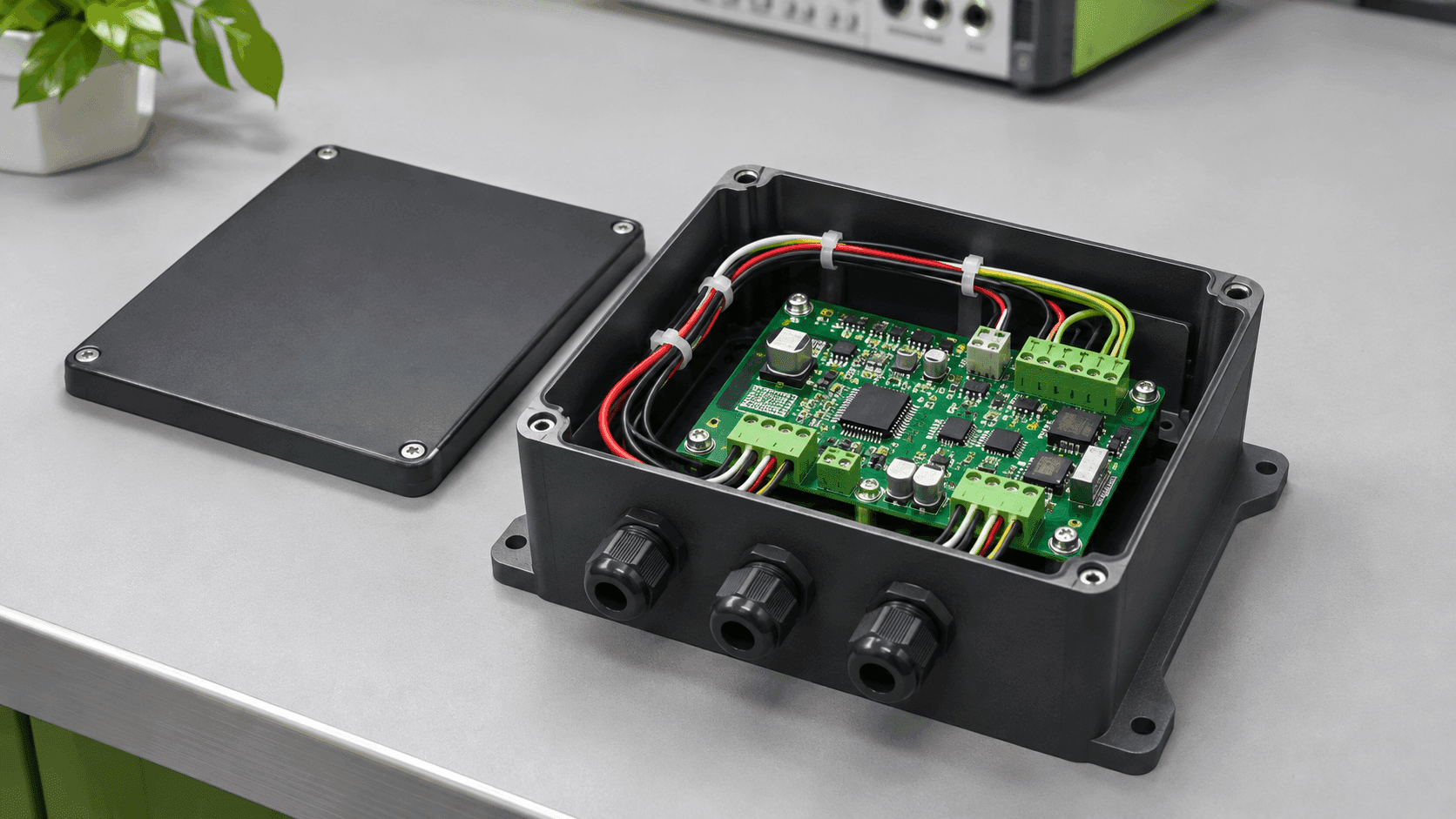
Preparing a box build enquiry? Find out what information to provide, from the BOM and drawings to quantities, wiring, testing, packaging and delivery details.
A useful box build quote starts with a clear description of the finished product, the work you want the manufacturer to carry out and the information available to define it. A bill of materials (BOM), current drawings, build quantity and any specific wiring, testing or delivery requirements are good starting points.
The exact information needed depends on the product and the agreed scope. If some details are not ready, identify them as open questions rather than leaving the manufacturer to make assumptions.
1. Define the product and the work required
Give the product or assembly a name, part number and revision. Explain what you want the manufacturer to supply or assemble, and what your own team will provide.
Clarify whether the enquiry concerns a complete enclosure build, integration of supplied subassemblies, or a particular part of a wider assembly. List any customer-supplied parts and identify anything you expect the manufacturer to source, if sourcing is part of the enquiry.
A clear division of responsibilities helps both sides understand what the quotation covers.
2. Include the BOM and current drawings
Provide the latest available BOM and identify its revision. Where the product has several assembly levels, show how the parts relate to each assembly or subassembly.
Depending on the design, useful supporting information may include:
- Assembly drawings and work instructions
- Enclosure drawings or 3D models
- PCB assembly drawings
- Wiring diagrams, cable drawings or connection schedules
- Connector details and pin assignments
- Label artwork and placement information
3. State quantities, variants and timing
Tell the manufacturer how many units you need quoted. If you want prices at different quantities, list each one. Include any expected repeat builds or planned variants, if known.
For multiple versions, identify what changes between them—for example, a different enclosure, cable arrangement or component set. The manufacturer needs to know whether each version requires separate materials, assembly instructions or testing.
Give your required delivery date or expected schedule, if available. If the timing is flexible or still being finalised, say so.
4. Explain material and substitution requirements
For each BOM line, make the part identifiable with a manufacturer part number and description where available. State whether the manufacturer will receive the materials from you or is being asked to source them.
If alternatives may be considered, explain how they must be approved. If no substitutions are allowed, state that clearly. A similar-looking component or mechanical part should not be treated as interchangeable without approval.
Also identify any requirements for material identification, lot records or other documentation. Agree what records are needed for the particular project rather than assuming a standard traceability package.
5. Describe assembly and wiring requirements
Provide the information needed to assemble the product as designed. This may include mounting details, cable routing, connection information, fasteners or assembly sequence where these are relevant.
If you have a prototype or previous build, it may help explain the intended arrangement. It should support the drawings and specifications rather than replace them where precise dimensions or connections matter.
6. Define inspection, testing and acceptance
Describe the checks the completed build must pass. If testing is required, provide the relevant procedure or explain the intended test and acceptance limits. State whether you need test results recorded and, if so, what information the record should contain.
Avoid asking for “full testing” without defining what that means for your product. The required checks depend on the design and the agreed acceptance requirements.
7. Include labelling, packaging and delivery details
If the product needs labels, provide the approved artwork, position and any required identification. Describe how the finished units should be protected and packed, including any project-specific packaging instructions.
Include delivery quantities, destination and required timing if known. Packaging and delivery requirements can affect the work included in a quotation, so it is helpful to agree them early.
Box build quote checklist
Before sending an enquiry, check whether you can provide:
- Product name, part number and revision
- Description of the requested build scope
- BOM and current drawings
- Expected quantities, variants and timing
- Clear responsibility for supplied and sourced materials
- Wiring and connection information, where applicable
- Approved substitution rules
- Inspection, testing and acceptance requirements
- Labelling, packaging and delivery details
- A list of details still to be confirmed
You do not need to have every item finalised before starting a conversation. Make clear what is confirmed, what is provisional and what needs to be agreed. That gives the manufacturer a better basis to review the project and identify the next information needed.
If you are planning a box build, contact Synatel to discuss your requirements and the information available for a quotation.
Need help with your next project?
Talk to a Synatel engineer
Whether you need a PCB quote, a full BOM sourcing review or an assembly enquiry, our engineering team is ready to help.